Uncategorized · 27 November 2026
Vegetable Rava Upma for Two: Pan Size, Water Ratio and Texture Cues
Quick answer
For two modest servings, use 100 g Bombay rava, approximately 150 ml by volume, and start with 450 ml water. Choose a lidded saucepan or small kadai around 18–20 cm across, with roughly 2 litres capacity. Roast the rava until fragrant without browning, add it gradually to boiling water while stirring, then cook gently and rest covered. The 1:3 ratio is by volume, not weight, and is a starting point rather than a rule for every rava. (hawkinscookers.com)
1. Choose the rava before choosing the water ratio
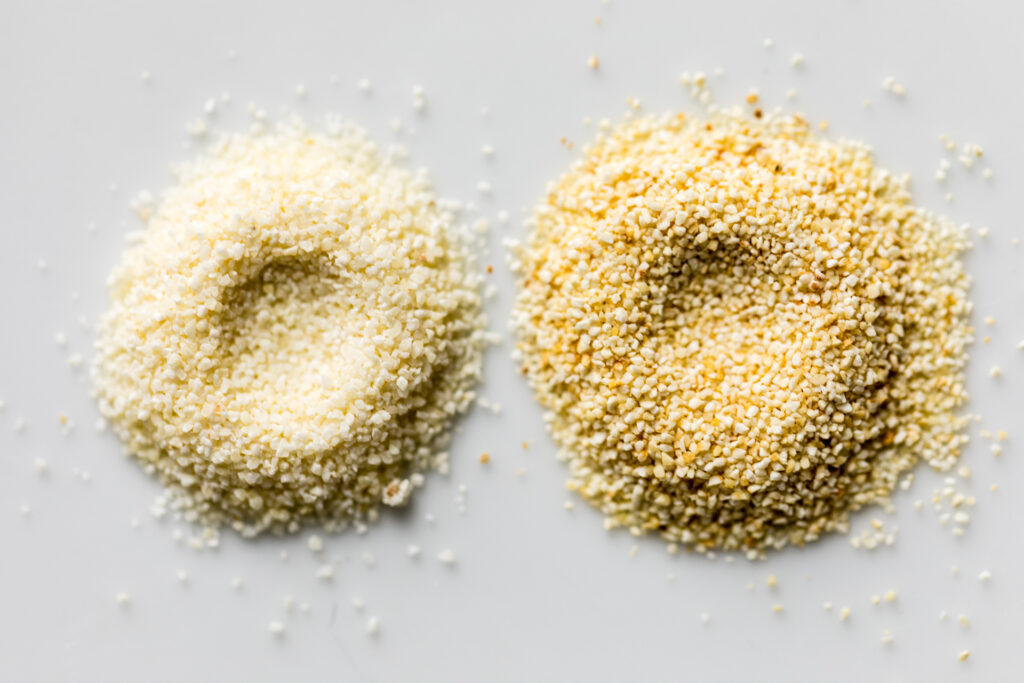
Use fine or medium wheat semolina sold as Bombay rava, sooji or upma rava. Very fine chiroti rava gives a softer result; broken-wheat rava needs a different approach. Keep the same grade while learning the recipe so that your adjustments mean something. (vegrecipesofindia.com)
Published upma recipes do not agree on one universal water quantity. Dassana Amit gives a range of 2½–3 volumes of water for soft upma, depending on the rava. Swasthi Shreekanth specifically recommends about three volumes for small batches and notes that different semolina varieties absorb different amounts. (vegrecipesofindia.com)
For this batch, start at the wetter end of that range: 150 ml rava to 450 ml water. The approximate 100 g conversion follows the semolina measurement in Hawkins’ published recipe; your packet may occupy a slightly different volume. On your first attempt, weigh the rava and note its loose, level volume rather than packing it into the measure. (hawkinscookers.com)
The target is soft, moist upma that holds together on a spoon—not necessarily separate grains like cooked rice.
2. Use a small, roomy pan with a lid
A practical starting choice is an 18–20 cm saucepan or small kadai of about 2 litres, with a stable base and a well-fitting lid. This is a working recommendation for the quantities below, not a tested minimum or a reason to buy another pan.
Check your existing pan before cooking:
- Can you sweep a spatula across the base and into the corners?
- Is there generous space above the water and vegetables for stirring?
- Can you hold the handle securely while adding rava?
- Does the lid sit properly?
- Is the pan approved for your hob?
A tall, narrow saucepan may be usable but awkward to stir. A very broad frying pan makes a small quantity harder to manage consistently. For repeatability, use the same pan and burner setting for your first few batches.
Do not copy another recipe’s induction wattage without considering its specified cookware. Hawkins, for example, supplies heat settings for its particular frying-pan recipe; those settings are not universal instructions for every saucepan. (hawkinscookers.com)
3. Measure the ingredients for two modest servings
Yield: two modest breakfast servings; appetites and accompaniments will affect portion size.
Planning time: allow about 30 minutes, including chopping and resting. Follow the cooking cues rather than treating that allowance as a deadline.
| Ingredient | Quantity |
|---|---|
| Fine or medium Bombay rava | 100 g, approximately 150 ml |
| Water | 450 ml initially |
| Oil or ghee | 15 ml |
| Onion, finely chopped | 50 g |
| Carrot, cut into small pieces | 30 g |
| Green beans, finely sliced | 25 g |
| Fresh ginger, finely chopped | 2–3 g |
| Mustard seeds | ¼ teaspoon |
| Split, skinned urad dal, optional | ½ teaspoon |
| Curry leaves | 5–6 small leaves |
| Dried red chilli | 1, or omit |
| Salt | Start with ¼ teaspoon; adjust to taste |
| Chopped coriander | Optional, to finish |
The vegetable and tempering quantities are a small-batch adaptation of Hawkins’ four-serving vegetable upma. The higher starting water allowance follows the small-batch guidance discussed above; it is not simply Hawkins’ recipe halved. (hawkinscookers.com)
Keep another 60 ml of hot water available as a measured adjustment reserve. You may not need it.
For the first attempt, stick to the listed vegetables. If you substitute cooked vegetables, drain them and add them later rather than repeating the raw-vegetable cooking stage. Sanjeev Kapoor’s vegetable upma similarly adds blanched vegetables after most of the water has been absorbed. (sanjeevkapoor.com)
4. Roast, temper and soften the vegetables
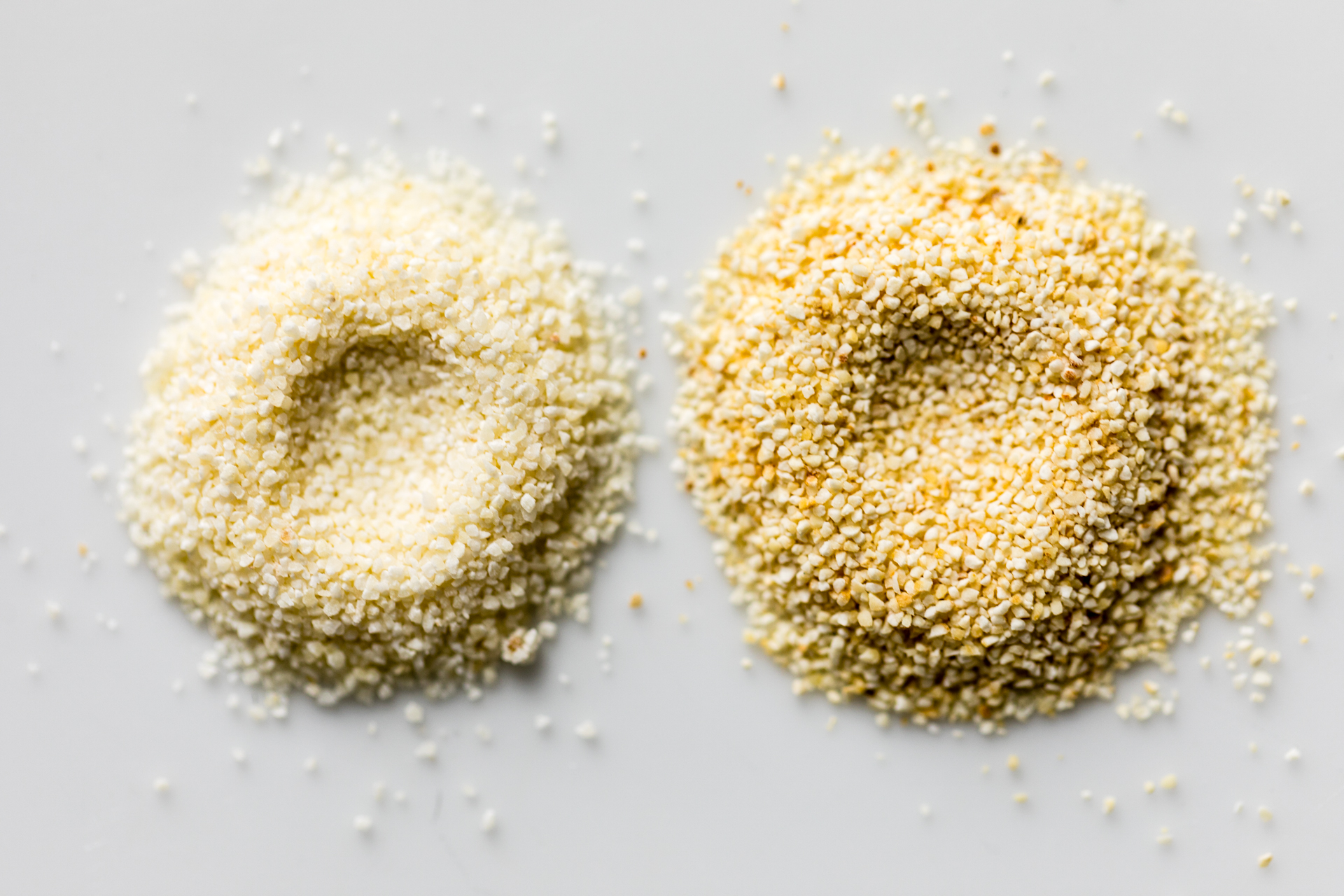
Roast the rava. Put it in the dry pan over low to medium-low heat. Stir frequently, sweeping the entire base. Look for a pleasant toasted smell and dry, freely moving grains. Keep it pale: browning is not the goal for this version. Tip it into a bowl once fragrant. (vegrecipesofindia.com)
Make the tempering. Add the oil or ghee to the pan. Add mustard seeds and, once they crackle, the optional urad dal. Let the dal become light golden, then add curry leaves and the dried chilli carefully. Add ginger and onion; cook until the onion becomes translucent. (hawkinscookers.com)
Soften the vegetables. Add carrot and beans, stir, then cover over low heat. Hawkins’ recipe allows about four minutes for similarly small vegetable pieces, with occasional stirring. Use tenderness as the deciding check: the vegetables should no longer feel hard when pressed with the edge of a spoon. (hawkinscookers.com)
If the vegetables threaten to catch, use a little water from the measured 450 ml rather than pouring in an unrecorded splash.
For wetter substitutions, such as tomato, record the change separately. There is no verified millilitre-for-millilitre deduction here for vegetable moisture. A sensible first comparison is to cook off visible pooled liquid before adding the measured water, then judge the finished batch.

5. Add the rava gradually, then cook and rest
Pour in the remaining measured water and add the salt. Bring it to a full boil, then lower the heat.
Add the roasted rava in a thin stream or several small batches, stirring continuously as it enters the water. Do not tip the whole bowl into one spot. Once incorporated, check immediately for dry pockets and press apart any soft lumps. (vegrecipesofindia.com)
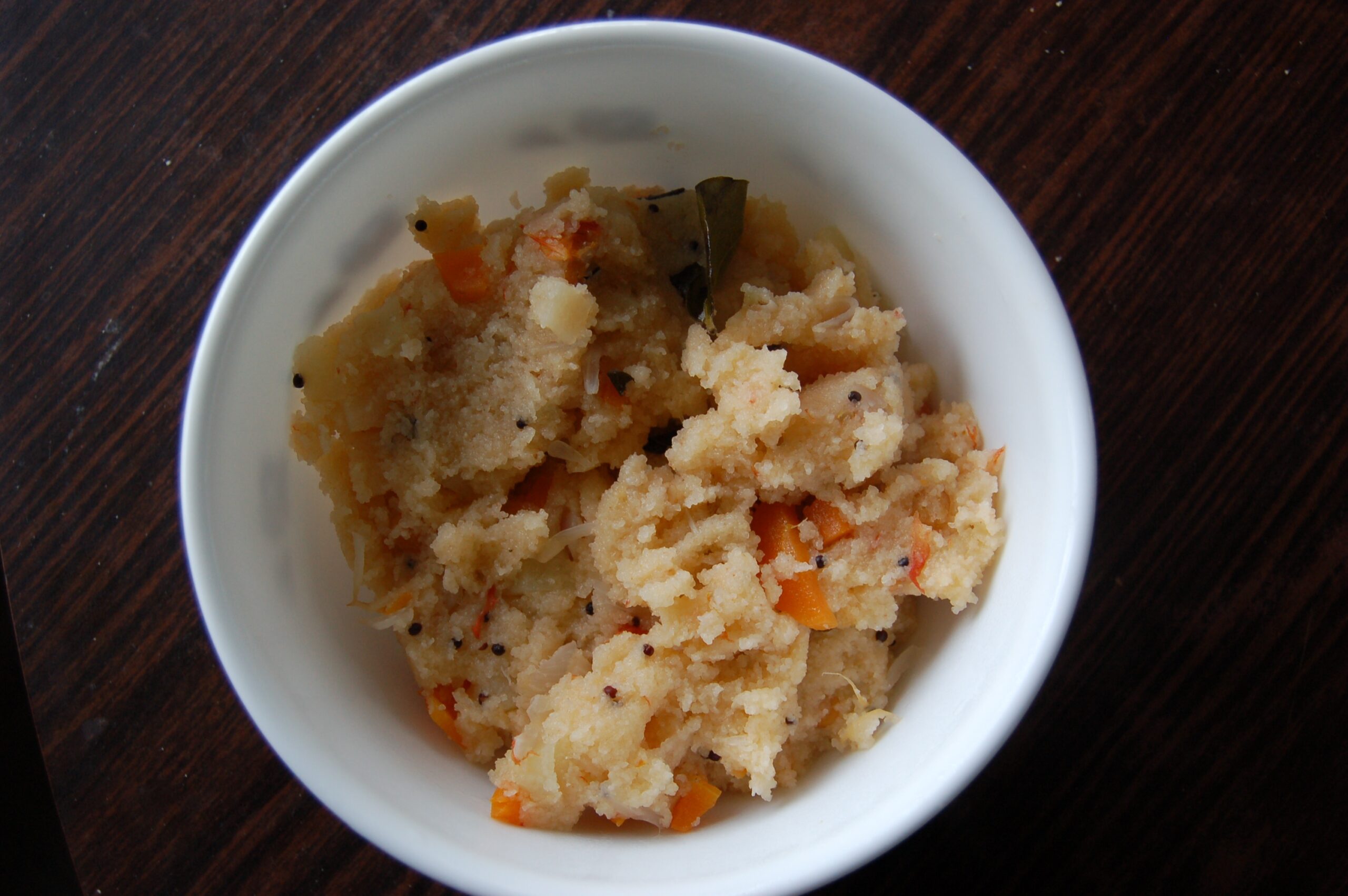
When the mixture thickens, cover and cook on the lowest heat for about 2–4 minutes. Check a small, cooled spoonful. If the rava is soft throughout, switch off the heat and leave covered for five minutes before gently loosening and serving. These timings follow the covered cooking and resting sequence in Swasthi’s recipe. (indianhealthyrecipes.com)
Use three practical checks:
- Before covering: no loose dry rava should remain.
- Before switching off: the cooled sample should not have a hard, gritty centre.
- After resting: judge the serving texture before adding more water.
Hot upma can look more clumped than it does after standing briefly, so avoid trying to correct its final texture immediately after incorporation. (indianhealthyrecipes.com)

6. Adjust one measured amount at a time
Use the following as a troubleshooting sequence, not a promise that every batch can be fully rescued.
| Problem | First practical check or adjustment |
|---|---|
| Dry and gritty after resting | Try 15 ml hot water, fold through, cover and cook gently again; reassess before adding more. |
| Soft but drier than you prefer | Record an extra 15–30 ml water for the next batch. |
| Wetter than you prefer | Give it the covered rest first; if still too wet, briefly cook uncovered on low heat. |
| Lumps with dry centres | Break them apart promptly; next time add smaller batches while stirring. |
| Sticking or scorching underneath | Lower the heat; do not scrape a burnt layer into the rest. |
| Vegetables remain hard | Soften them further before adding rava next time, or use separately cooked vegetables. |
Gradual addition, adequate roasting and gentle cooking are recurring checks in the published recipes. Water alone is not the only variable to investigate. (vegrecipesofindia.com)
Worked adjustment example: suppose you use 150 ml rava and 450 ml water, but prefer a slightly softer result. On the next attempt, try 480 ml water:
- Original: 450 ÷ 150 = 3 volumes water
- Adjusted: 480 ÷ 150 = 3.2 volumes water
- Change: 30 ml extra water
That is a proposed kitchen comparison, not a separately tested formula. Keep the rava, pan, vegetables and heat unchanged so you can evaluate the water adjustment.
If the result is too soft, make the next comparison in the opposite direction—for example, 420 ml instead of 450 ml. Avoid changing the fat, vegetable quantity and water simultaneously.
7. Cool leftovers promptly and reheat thoroughly
Transfer any portion you intend to save into a small, shallow container and refrigerate promptly. Do not leave the whole pan on the counter waiting for it to become completely cold. FoodSafety.gov recommends shallow containers for rapid cooling. (foodsafety.gov)
Keep the refrigerator at 4°C/40°F or below. Refrigerate perishable leftovers within two hours, or within one hour when exposed to temperatures above 32°C/90°F. These are maximum limits, not suggested cooling times. Discard food that has exceeded them. (foodsafety.gov)
Use properly refrigerated cooked leftovers within four days, or freeze them sooner if you will not use them. This is general leftover guidance, not an upma-specific shelf-life guarantee. (foodsafety.gov)
When reheating, add a little water if needed, cover, and heat thoroughly. For microwave reheating, use a microwave-safe dish and check several places with a food thermometer: leftovers should reach 74°C/165°F throughout. A warm edge is not enough to establish that the centre is ready. (foodsafety.gov)