Uncategorized · 27 November 2026
Food Sticking to Stainless Steel? Fixes for Eggs, Potatoes and Masala
Quick answer
Food sticking to stainless steel usually calls for a change in heat, fat coverage, surface moisture or turning time—not automatically a new pan. Start with a clean surface, follow your pan’s heating instructions and use enough fat to cover the cooking area. For fried eggs and potatoes, test for release before forcing a turn. For masala, reduce heat and stir as moisture disappears. More heat is not a universal fix. (all-clad.ca)
1. Diagnose the sticking before changing your technique
Notice when the problem starts. Food that tears when moved too early needs a different response from food that blackens almost immediately. Manufacturer guidance identifies insufficient preheating, inadequate oil, excessive heat and premature turning as possible causes—not one single temperature mistake. (all-clad.ca)
Use this as a troubleshooting guide, rather than a definite diagnosis:
| What you notice | What to check first | Next adjustment |
|---|---|---|
| Food tears when you try to turn it | Has the underside had time to set? | Pause before testing a small edge again |
| Egg edges brown immediately | Is the heat too aggressive? | Use gentler heat for the next attempt |
| Potatoes remain pale in a crowded pan | Is released moisture accumulating? | Cook a smaller batch |
| Onions begin catching after initially cooking well | Has their liquid dried away? | Reduce heat and stir more attentively |
| A sticky film remains after washing | Is old grease or food baked onto the surface? | Clean the residue before another trial |
These checks follow manufacturer and cookware-industry guidance on release, egg temperature, crowding, onion frying and baked-on residue. Several causes can occur together. (all-clad.com)
For your next attempt, write down the symptom and change one thing first. “Smaller potato batch” is easier to evaluate than simultaneously changing the burner, oil and preparation method.
2. Preheat according to your pan—not a universal water-drop rule
Check the instructions for the exact cookware range before heating an empty pan. All-Clad’s uncoated stainless guidance allows preheating over low to moderate heat. In contrast, Hawkins’ manual for its Stainless Steel Cook n Serve sandwich-bottom cookware explicitly prohibits dry heating and sets limits for preheating with a small quantity of fat. Neither instruction should be extended to every stainless steel pan. (all-clad.com)
This matters when following videos that recommend heating an empty pan until water beads skate across it. That behaviour is the Leidenfrost effect: water droplets ride on a layer of vapour. Heritage Steel cautions that this is a high-temperature reference, not proof that the pan is at the right cooking temperature for every food. (heritagesteel.us)
For gently cooked eggs, you do not need to chase that effect. Heritage Steel’s egg guidance instead uses moderate preheating and the behaviour of the fat: butter should foam gently rather than brown or smoke immediately. (heritagesteel.us)
The practical rule is to follow your manual’s permitted sequence, then adjust for the dish. Do not keep increasing the heat simply because the previous batch stuck. Hawkins specifically warns that overheating can cause sticking and burning. (hawkinscookers.com)

3. Check fat coverage, surface moisture and batch size
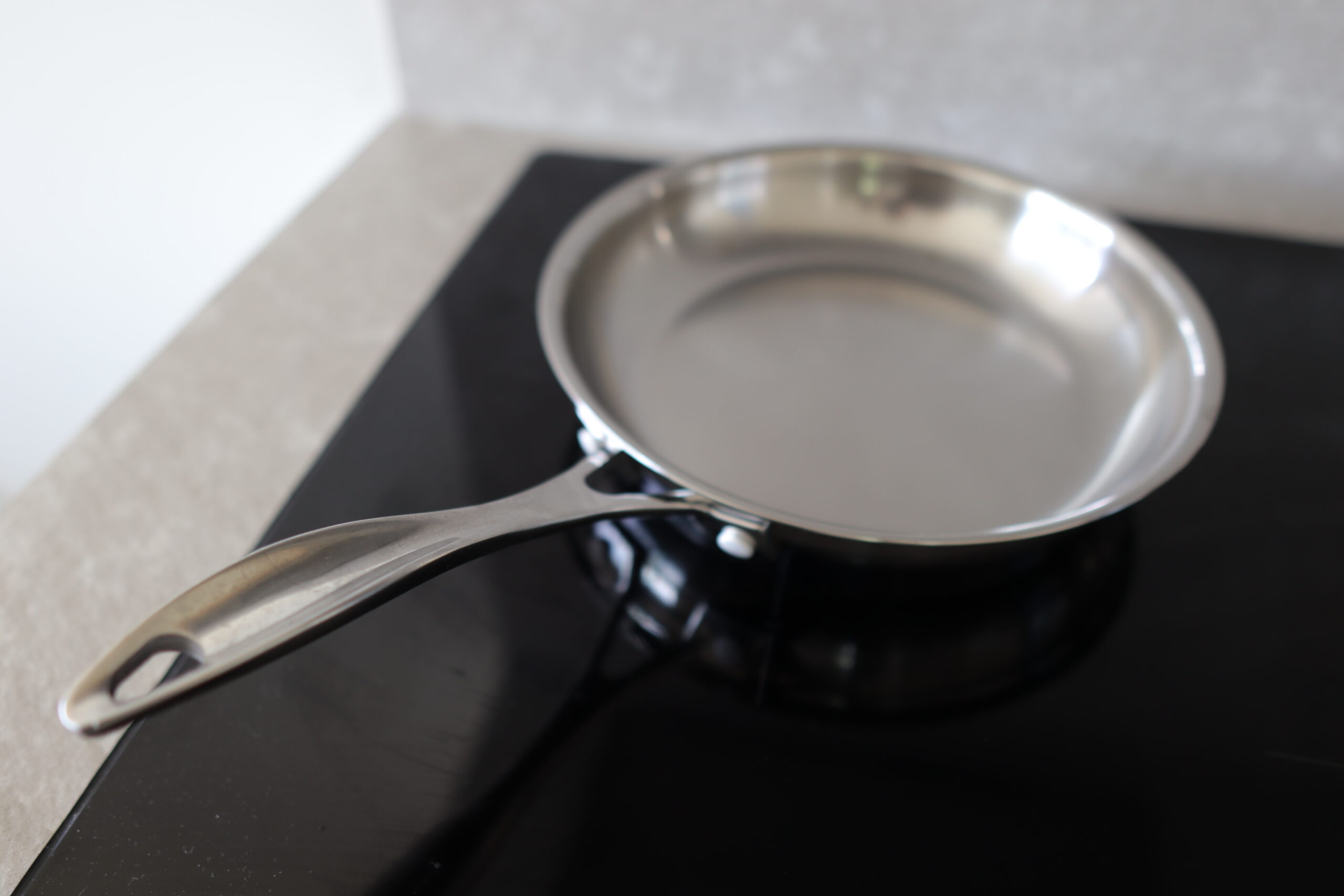
Look for coverage across the cooking area, not merely a puddle in one place. All-Clad advises using enough oil to cover the bottom before adding food. Tilt the pan to distribute it, following the heating sequence allowed by your manufacturer. (all-clad.ca)
For ingredients you want to brown, remove obvious surface moisture first. Drain washed potato cubes thoroughly and pat them dry. This applies the manufacturer’s advice to dry food before frying; it is not a rule to dry ingredients intended for a wet sauce. (all-clad.ca)
Then check the load. When food releases moisture faster than it can evaporate, it steams rather than browns. Packing pieces together also makes even contact with the pan harder. Cooking in batches can therefore be more useful than turning up the burner under an overloaded pan. (worldstainless.org)
Keep two different cooking goals separate:
- Browning potatoes: start with a relatively dry surface and room around the pieces.
- Cooking down masala: manage moisture as it evaporates, rather than expecting the mixture to behave like separate pieces being fried.
Those distinctions follow the guidance on browning and on reducing heat as onions dry out. (worldstainless.org)
4. Eggs: use gentle heat and test release without tearing
Stainless steel can cook eggs, but it is less forgiving than a non-stick surface. ZWILLING identifies eggs and omelettes as less suitable uses for uncoated stainless steel, while All-Clad provides stainless-steel egg techniques. Choosing a non-stick pan for delicate, low-fat eggs is a reasonable equipment choice—not a failure to master stainless steel. (zwilling.com)
Worked example: troubleshoot one fried egg
Use this as a small diagnostic attempt, not a promise of effortless release:
- Start with a clean pan and follow its permitted preheating method.
- Spread butter or oil over the area where the egg will sit.
- If butter browns immediately, stop and let the pan cool somewhat before proceeding.
- Slide the egg in gently and maintain low to medium-low heat.
- Let the white begin setting before trying to lift it. Test an edge carefully; do not push hard through resistance.
- If the underside colours too quickly, reduce heat. A suitable lid can help set the top without continuing to brown the bottom as aggressively. (heritagesteel.us)
For scrambled eggs, the movement is different: gently move the setting curds rather than leaving the entire mixture untouched while waiting for a crust. All-Clad recommends reducing heat before adding beaten eggs and moving them from the edges towards the centre. (all-clad.ca)
5. Potato cubes: dry them, leave space and turn deliberately
Potatoes introduce starch as well as moisture. Heritage Steel explains that cooked starch can become adhesive; its guidance also identifies moisture, crowding and insufficient fat coverage as contributors to sticking. More vigorous scraping does not address those conditions. (heritagesteel.us)
For your next batch, use this order:
- Drain and dry the cubes before frying.
- Heat the pan and fat according to the manual.
- Spread the cubes across the base rather than piling them deeply.
- Allow the contact surfaces time to brown before attempting a turn.
- Test a few pieces first instead of sweeping a spatula forcefully through the whole batch. (all-clad.ca)
If the pan is crowded and the potatoes are pale, reduce the batch size next time. If they are darkening rapidly, waiting longer is not the answer: lower the heat. Manufacturer guidance supports both giving food time to release and avoiding excessive heat; neither instruction cancels the other. (worldstainless.org)

6. Onion-tomato masala: adjust as the mixture dries
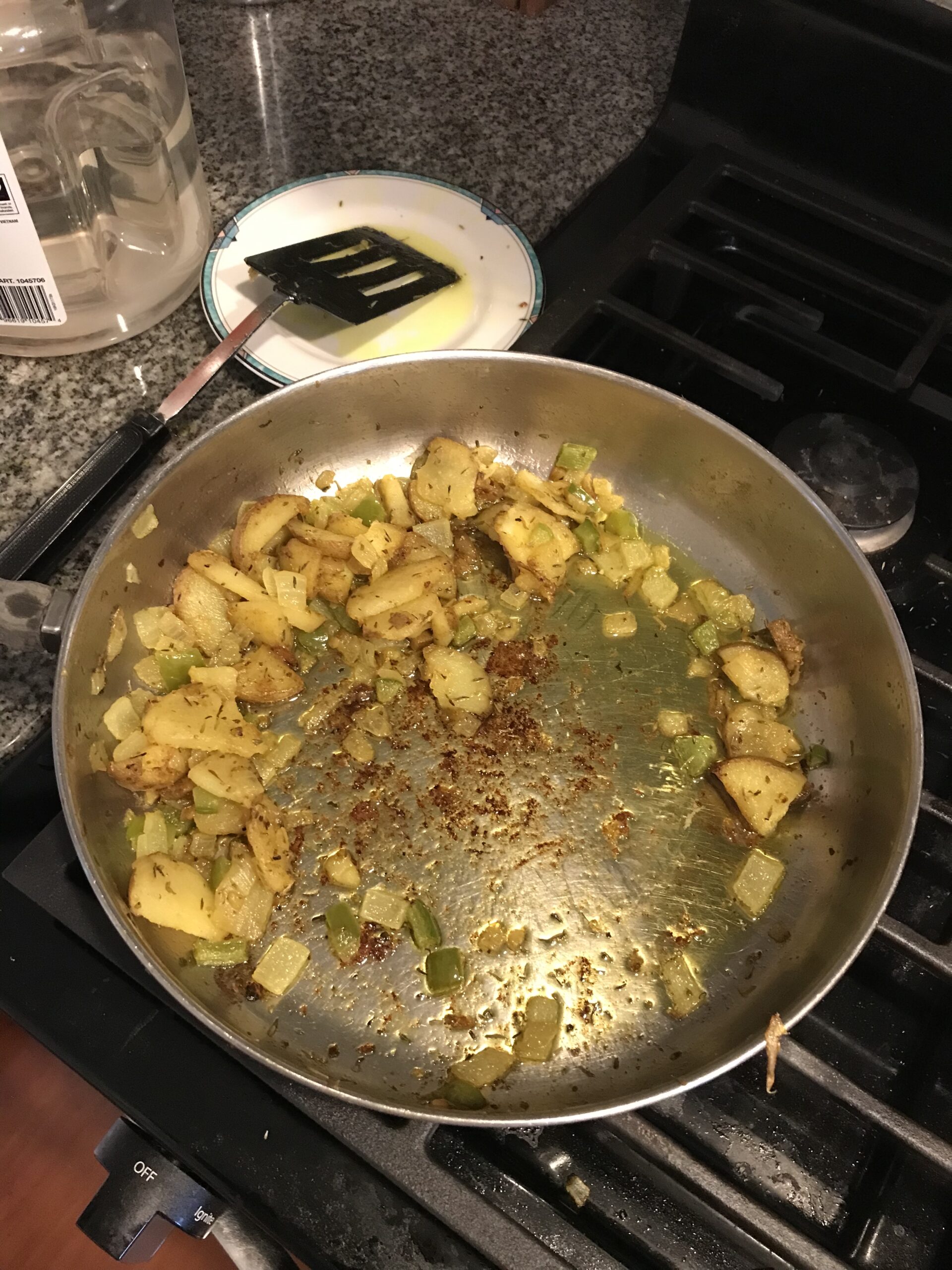
Masala needs a different approach from an intact fried egg. Onions and tomato paste contain sugars that can become sticky during browning, and a reducing mixture continually changes consistency. Do not expect it to release as one neat piece. (heritagesteel.us)
Hawkins’ Indian cookbook makes an important observation about onions: after their liquid dries, reduce heat if sticking begins. It also warns that colour can change quickly as onions approach the desired shade. This is a useful cue during onion-tomato cooking, rather than a reason to hold one burner setting throughout. (hawkinscookers.com)
For an open-pan masala, apply that guidance by watching the base as you stir:
- Reduce heat when the mixture starts catching more quickly.
- Stir across the bottom, not just through the centre.
- Distinguish browned deposits from food that is turning black.
- If a brown film needs loosening, use a little of the recipe’s cooking liquid and stir it up—a practical application of deglazing. Avoid adding liquid to a pool of very hot oil. (hawkinscookers.com)
The aim is controlled browning, not a spotless pan throughout cooking. Do not automatically add more oil whenever masala catches; first check whether the heat needs reducing or the mixture needs some of its planned liquid. Hawkins notes that some foods require oil, water or careful heat control to prevent sticking. (hawkinscookers.com)
7. Remove residue before judging the pan again
A rainbow tint and a layer of baked-on grease are different problems. All-Clad treats rainbow discolouration separately from burnt fat and food deposits. Hawkins warns that grease left after washing can bake onto the pan during its next use. (all-clad.com)
Start with the least aggressive cleaning method allowed by your manual:
- Let the pan cool before washing.
- Soak with warm, soapy water and use a soft sponge.
- For stubborn deposits, use a manufacturer-approved nylon or plastic scrubber.
- If necessary, follow the manual’s simmering-water or stainless-cleanser procedure.
- Rinse and dry before checking the cooking surface again. (all-clad.com)
Do not assume steel wool, bleach or oven cleaner is acceptable because the pan is metal. All-Clad advises against these products and warns against putting a hot pan under cold water. (all-clad.com)
For the next cooking attempt, keep a short checklist: clean surface, permitted preheat, even fat coverage, manageable batch and movement suited to the food. Use the symptom to choose your adjustment. Eggs, potatoes and masala do not need identical treatment—and no single heating trick prevents every kind of sticking. (all-clad.ca)